
The original pavilion was dismantled in 1930, but its architectural significance led to a meticulous reconstruction between 1983 and 1986 on its original site in Barcelona. Today, it stands as an iconic landmark and a study model for architecture students and enthusiasts worldwide, representing a turning point in modernist architecture and spatial design. View article at Barcelona Pavilion Mies van der Rohe
Barcelona Pavilion Mies van der Rohe
The Barcelona Pavilion, designed by Ludwig Mies van der Rohe, was the German Pavilion for the 1929 International Exposition in...More info: Ripolles-Manrique House Teo Hidalgo Nácher Bjarke ingels group mountain dwelling Dwelling waterstudio Norrnäs house hermansson hiller
Design rating: 4.5 ★ ★ ★ ★ ★
Architecture
Architecture
Last update at 20 · 11 · by milo
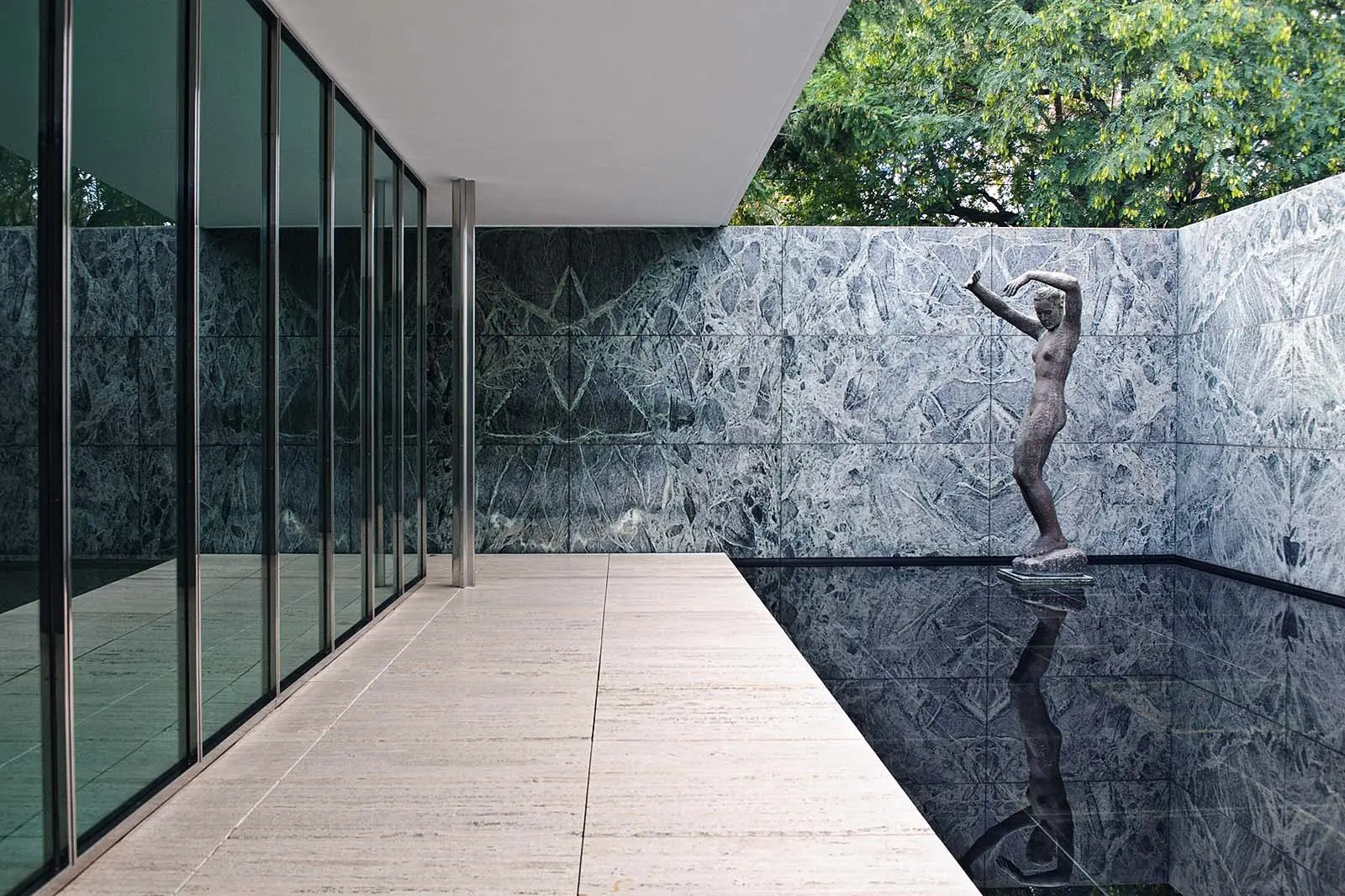
‧‧‧ One of 84The Barcelona Pavilion, designed by Ludwig Mies van der Rohe, was the German Pavilion for the 1929 International Exposition in Barcelona, Spain.
This building was used for the official opening of the German section of the exhibition. It is an important building in the history of modern architecture, known for its simple form and its spectacular use of extravagant materials, such as marble, red onyx and travertine.
Barcelona Pavilion Mies van der Rohe
Mies wanted this building to become ‘an ideal zone of tranquillity’ for the weary visitor, who should be invited into the pavilion on the way to the next attraction. Since the pavilion lacked a real exhibition space, the building itself was to become the exhibit. The pavilion was designed to ‘block’ any passage through the site, rather, one would have to go through the building. Visitors would enter by going up a few stairs, and due to the slightly sloped site, would leave at ground level in the direction of the Poble Espanyol.
Address:Barcelona, Spain Barcelona Pavilion
Barcelona Pavilion
